Site Content

campus life

Wake ‘N Shake

Even though it is Spring Break, some of our students are hard at work on an upcoming campus project, Wake ‘N Shake.  The Daily Deac talked to Lucas Swenson, a junior Business and Enterprise Management major and co-chair of Wake ‘N Shake 2013, about this terrific campus event.

—————————-

What is Wake n Shake?
Wake ‘N Shake is Wake Forest University’s 12-hour dance marathon which benefits the Brian Piccolo Cancer Research Fund. Wake Forest students will stay on their feet for up to twelve hours to raise money and awareness for the fight against cancer. 

When is it?
March 23 from noon to midnight in Reynolds Gym. 

How can students get involved?  Is it too late to sign up/form a team?
Student can get involved by registering at wakenshake.com. We have already had over 1,000 students register, setting a record for Wake ‘N Shake. Our hope is for 1,300 students to register for this year’s event before March 23rd. We encourage parents to have a conversation with their students about whether they are participating in WNS. It is not too late to sign up, joining with a team or as an individual.  

What does Wake ‘N  Shake benefit?
Wake ‘N Shake benefits the Brian Piccolo Cancer Research Fund at the Comprehensive Cancer Center in the Wake Forest Baptist Medical Center.  

The Brian Piccolo Cancer Research Fund was founded in 1980 by Wake Forest students wishing to preserve the memory of Wake Forest alum and Chicago Bears football star, Brian Piccolo, who died of cancer. During his senior season in 1964, he led the nation in rushing and scoring. Brian Piccolo went on to a short career with the Bears. Since his death in 1970 at the age of 26, there has been an 80% cure rate for embryonal cell carcinoma, the type of cancer from which Piccolo suffered. Since then, the inspirational life of Brian Piccolo has motivated students to raise funds and awareness for the cancer drive each year. 

After 32 years of annual fundraisers, over $1,200,000 has been raised to benefit cancer research. All of the money raised goes directly to the Comprehensive Cancer Center at Wake Forest University Baptist Medical Center. The efforts of Wake Forest students contribute greatly in the fight against cancer, as the money raised is donated directly to the Cancer Center and helps fund innovative trials and experiments to fight the disease. 

Why did you want to get involved in Wake ‘N Shake?
I wanted to get involved in Wake ‘N Shake because I developed a passion for Dance Marathons during my senior year at Ballard High School in Louisville, Kentucky. I was the Overall Chair of the 1st annual Dance Marathon, benefiting Pediatric Oncology Research at the University of Kentucky. After starting this event from the ground up, I became very zealous about cancer benefits and knew that I wanted to make a difference in Wake Forest’s event as soon as I arrived on campus and have been Waking and Shaking since then.

Talk a little about what today’s students think about service and Pro Humanitate.
I believe that service and the idea of Pro Humanitate has become engraved into the minds of Wake Forest Students. Most of us were very involved in our respective high schools and have developed a true passion and desire to make a difference in college. We do good for others because we deeply care about other people and sincerely want to improve the lives of those in need. Whether it is students lining up to do service on Saturday mornings or spending their Spring Break on a Wake Alternate Break service trip or doing mission work in Haiti, we see the impact that Wake Forest students have on the larger community each day. I am proud to be a member of a community that puts service and others above themselves. 

What’s the best part of Wake ‘N Shake?
My favorite part of Wake ‘N Shake is hearing from and meeting the six Team Champions throughout the day. The idea of highlighting Team Champions at WNS started 2 years and is now an integral part of the event. These individuals are extremely close to a cancer battle; typically they have fought or are currently fighting cancer and represent a team of participants during the event. They each get an opportunity to tell their story and what they have been through to all our participants. Each time I hear a Team Champion speak, it puts everything into perspective for me. They remind us why we are there and why we have worked so hard throughout the year. For them. For others. 

Be sure to look at our website where we will highlight all six 2013 Team Champions. They are amazing, inspiring and incredible people! 

Anything else you’d want parents to know?
Here’s how parents can be involved: 

DONATE - It is never too late to donate towards the cause. Your donations help fund innovative trials and treatments at the Comprehensive Cancer Center at Wake Forest Baptist Medical Center. We encourage you to donate on behalf of a student that you know participating or a general donation to the cause. Checks can also be sent to our office: 

Make checks out to:
WFU Brian Piccolo Cancer Research Fund
and they can be sent to:
WFU Wake ‘n Shake
c/o Student Life and Development
PO Box 7526
Wake Forest University
Winston-Salem, NC
27109 

WATCH - Parents, have you donated to the Brian Piccolo Cancer Research Fund on behalf of your student but still unsure what the event is all about? The Leadership Team is proud to be broadcasting WNS 2013 live on our website www.wakenshake.com, for the first time in the history of WNS. We encourage you to tune in to watch your students take part in this school wide endeavor to beat cancer.  

Email wns@wfu.edu if you have any questions about the event and a member of the Leadership Team will respond to you as soon as we can!


Wake Debate Team Champions

Big news on campus yesterday!  We want to congratulate Wake Debaters Richard Min (a senior Politics and International Affairs major) and Ken Bailey (a senior Computer Science major) who won the American Debate Association National Tournament.  They defeated Emory University in the finals on Monday, March 11.

Wake Forest debaters fared very well in this tournament:

- Min and Bailey met Wake’s Jacob Hurwitz (a first-year student) and Lee Quinn (a junior Classical Studies major) in the semi-finals

- Teams of Joe LeDuc (a sophomore Politics and International Affairs major) and Michael Crowe  (a sophomore Politics and International Affairs major) and Bennett Clifford ( a first-year student) and Vale Villa (a first-year student) reached the Octa-Final Round

For more on the Debate team, read this excellent article in the most recent issue of the Wake Forest Magazine.

Quiet Campus

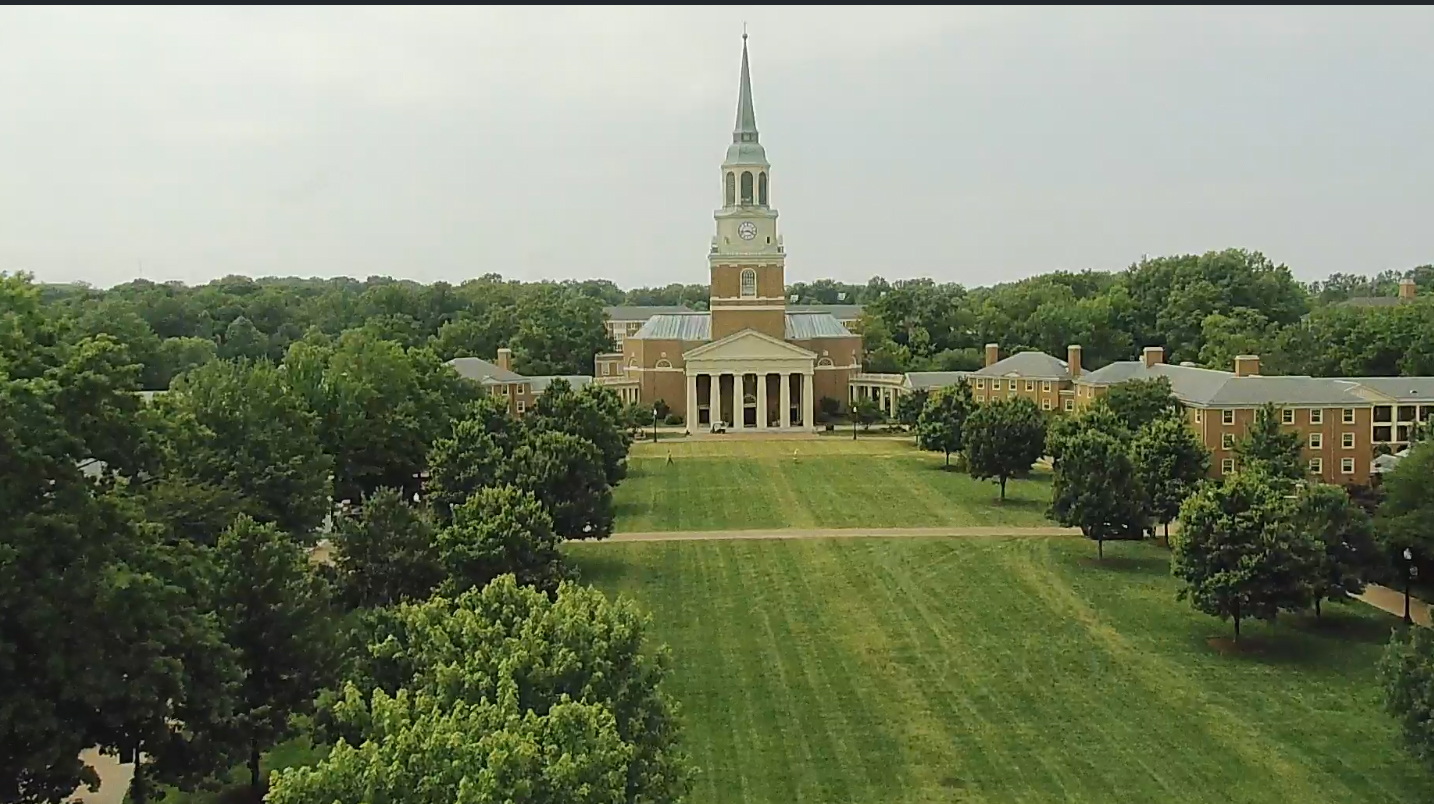
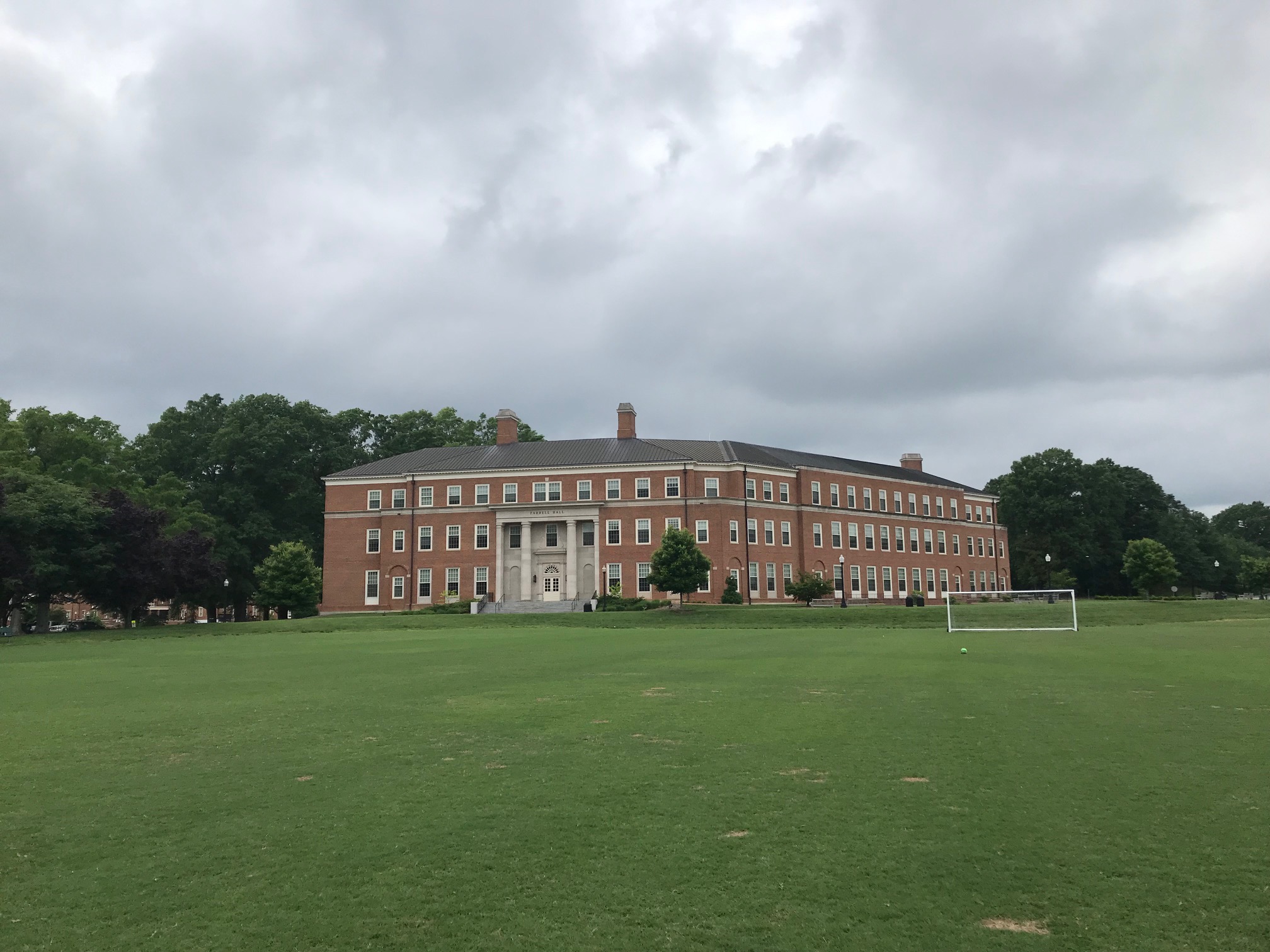
Spring Break is here, and the feeling of spring is here as well.  Yesterday it was sunny and reached nearly 70 degrees.  If your students had been here, they would have patterned the fields with blankets to sit outside and read, nap, catch some sun, or just relax with friends.

There was big news last Friday with the announcement of our Commencement and Baccalaureate speakers, Gwen Ifill and Carolyn Woo, respectively.  Having listened to many a commencement speech, I will admit to being a little biased towards journalists; they have done some of the best ones in my opinion.  It will be interesting to hear this one.

Our office has been getting many calls and emails from parents and families about the date for fall Family Weekend.  The date has not yet been set, but I can promise you that as soon as it is we will post it on the Parents’ Page.  While normally the dates for Homecoming and Family Weekend get set fairly soon after the release of the football schedule, there are a number of considerations we have to be attentive to, not the least of which is ensuring there is adequate hotel space.  I beg your patience as those discussions are finalized and hope that we will have a date for you very soon.

If your students are home with you for Spring Break, remember this is time for TLC, TLC, TLC!

Senior Orations: Daniel Stefany

Last but certainly not least, we want to share with you the senior oration of Daniel Stefany.  (Editor’s note: I have known the Stefany family for years.  His parents are both Wake Forest alumni and they have another son who graduated in 2009.  The Stefanys have served on the Alumni Council and this year are chairing the Parents’ Council.  For those of you fortunate enough to live in the Tampa area, they have hosted the Tampa New Student Reception for years.  It has been a pleasure to work with them as alumni and parent volunteers, and to watch both their sons blossom while at Wake Forest. ) 

——————————

The Burden of Ignorance

In November of 2011, this campus witnessed what can only be described as a hate crime, when homophobic slurs were spray-painted on several buildings and fraternity lounges. Many of you may have different memories of that day, but I remember it as the first day of my life where I was consciously ashamed to be a member of this university. About a week later, a well written letter to the Wake Forest student body came from Dr. Hatch talking about the incident. I remember reading this letter and feeling anger at its timing but also the excitement as if something big and momentous was about to happen. I went to my first class the next day, a constitutional law course, still incensed by the prejudiced vandalism but hopeful that something good could come out of it. Shortly after class began, Dr. Harriger announced that she wanted to spend the entire session discussing the incident and what it meant to us as students and members of the Wake Forest community. For the next hour a genuine and important conversation took place between our professor and students from all the different cross sections of this campus. Some students tuned out, perhaps predictably, and others became preoccupied with things like blaming particular groups for the event, but a still sizable segment genuinely listened, contributed, and benefited from the discussion that took place.

When I think about that incident and its aftermath, I think about the words of Dr. Maya Angelou—words which every freshman student hears during orientation: “Here you are invited to lay down the heavy, heavy burden of ignorance.” Sitting in the chairs of Scales Fine Arts Center four years ago, these are the same words I heard as a freshman and the same words I have heard each year since as a Resident Advisor. To me, they represent the great promise and the value of higher education; however, I am convinced also that they represent a value which has begun to disappear. As wonderful of an experience as my peers and I had in that class, it was only one class. I was taking five others where it went unmentioned, and the opportunity was there for so much more. If ever there was a chance to remove the burden of ignorance as Dr. Angelou foretold, this was the time for it and it could have been done campus-wide. The GSSA and student body were ready. They did their part and looked to our administration for help. Instead an important conversation was avoided, and this university revealed a very real gap between what it claimed to be and what it actually was. Then, hardly a year later, we held a debate on this very campus about whether or not we ought to continue to host Chic-Fil-a considering its stated views on LGBTQ issues. We were so quick and ready to debate the merits of another organization when we had so recently and spectacularly refused the opportunity for self-inspection ourselves. At a bare minimum, how much more informed could that debate have been?

Higher education faces a challenge today. In the world of fast tracked degrees, rigid syllabi driven classes, and college rankings, it is easy to lose sight of what’s truly important; however we must hold on to that which gives us it the most value. It is not the degree that will someday bring the high-paying job, but the invitation that Dr. Angelou spoke to us all about. It is the opportunity to rid ourselves of the ignorance that claims so many of us. I believe that higher education is in danger of becoming just another stepping stone in life, a means to more fashionable ends like jobs and money. This is something that universities across the country must resist. Faced with a growing gap between what a university educational experience purports to be and what it actually is, we must aspire to close this gap. We must aspire to live up to the promise every freshman at Wake Forest hears when they first walk these beautiful grounds. Higher education must dedicate itself to the difficult, challenging conversations of our time and never shy away from introspection and opportunities for self-improvement.

We cannot force anyone to participate in these conversations, but we can do better to make sure the invitation is extended. Some will ignore it, sure, and focus instead on the next step to achieve that paycheck or getting to the next party. But I believe we would all be surprised by the diversity and number of students who would take advantage of such a wonderful gift—a true education, more valuable than any job our degrees may yet bring us. It is a blessing for us to be here and it is criminal for us to waste our time while we are, and it is equally criminal for our time to be wasted. Here—here we are invited to lay down the heavy, heavy burden of ignorance. Here—on these grounds and in these classrooms. In today’s world of online classes and short-cuts, we must never forget this should be our focus, and universities across the country and world must aspire to be places where the invitation to learn is one that is both constant and true.

Senior Orations: Chesleigh Fowler

We have two more Senior Orations to feature, and today we are showing the work of Chesleigh Fowler.

———————

Statistics of Success

19th century German anatomist Julian Wolff proposed a theory that a bone once broken will grow back stronger than it was before the break. Those of us who have, in fact, broken bones have first hand knowledge that this particular adage is not entirely true.  In a different context, however, I can understand Dr. Wolff’s theory. A site of identified weakness can, with time and care, become an area of strength.  There is perhaps no better proof of that theory than the lessons learned here in the study of liberal arts at Wake Forest.

I came to college as a person who had faced very little failure in my life. I had done well in high school, flourishing academically, athletically and socially. The competitive drive that I had always had was well fed, and I looked forward to the new and varied challenges that college would present me. I had been encouraged to believe that the world was my oyster, and if I worked hard enough, I would succeed at the tasks set before me. During my first semester of freshman year, my worldview changed rather drastically when I was introduced to my own personal kryptonite: Elementary Probability and Statistics.

To say that I was a poor student of Statistics would be a vast understatement; I was an unmitigated disaster. For the first time in my life, I found myself working tirelessly, and achieving little. I was quick to blame the professor, the material, and even my own apparently useless brain but no matter what, I was lost. It was at this very early stage in my college career that I learned perhaps the most valuable piece of information I have absorbed over the past four years: I needed to turn to those intelligent and talented people around me for help. I started studying with classmates before tests, I went to a tutor for help on homework problems, and slowly, I began to improve. 

In reaching out to my peers, I found a port in the storm, and though I didn’t “ace” the class, I didn’t fail either. It was a small victory that taught me a greater lesson about the way I needed to approach every aspect of my liberal arts education; in every classroom, there is a scientist, a dancer, a mathematician, an economist, a writer, a politician, and a philosopher. By identifying and accepting my own shortcomings and weaknesses, I could adapt and become stronger as I looked to the people around me for help. 

When I look back on my time at Wake Forest, and on the many different areas of study I explored before becoming an English major, I can’t help but appreciate the way that the liberal arts system forces a student to find themselves through a rigorous process of elimination. I have known plenty of people who knew exactly what they wanted to do from the moment they set foot on this campus, and who stuck to that plan. I have also known plenty of students who had a completely finite strategy that was totally upended when they were introduced to an academic interest they never knew existed. And I have known students who, like myself, had no idea where they would be at the end of their time at Wake, and who explored every possible option before figuring out not only what they wanted to study, but what actively engaged their interest. 

We are a student body of vastly different people who have been challenged to think critically, engage academically, and work in fields and areas that we are not comfortable with. However, because we have explored and identified our weaknesses as well as our strengths, we are better students who are well equipped to utilize our skills, and to identify the value of the skills of others. We spend four years in classes that encourage active debate, discussion and collaboration, all of which encourage us to develop our own voice, and to learn to listen to the unique perspectives that other people have to share. 

Through many trials and much error, I have learned that I am not a scientist, a dancer, a painter, an economist, and I am certainly not a mathematician. The competitor in me would like to look at these weaknesses as types of failure, but as I have learned over the past four years, weakness is not failure. People who can contribute complementary strengths to my weaknesses have surrounded me since I arrived here, and just as I have learned to ask for their help, I have learned to use my own skills to help them. We all spend our time here as explorers, attempting to discover our niche. A liberal arts education seeks to educate the whole person, forcing us to examine every angle of academia before we can specifically define our pursuits. We are encouraged not only to celebrate and applaud our own strengths, but also to be able to acknowledge our weaknesses so that we can learn to utilize the strengths of others. Just like a broken bone that exists as an obvious site of limitation, our weaknesses as students become some of the greatest teachers we will ever have, because when correctly understood, those weakness encourage us to turn to the greatest strength we have at a school like Wake Forest; our peers.   

Wake Forest Post Secret

Just after Spring Break, Student Union is hosting ‘the most trusted stranger in America,” Frank Warren of Post Secret fame.  He will speak on Tuesday, March 19th at 7 pm in Wait Chapel.  For those of you who aren’t familiar with Post Secret, here’s a description:

“Frank Warren’s PostSecret.com, which began as a small, personal project, is now the third-largest blog on the internet. Warren receives thousands of postcards a week to his home, each containing an anonymous secret. A new set of postcards are posted on the blog each week, and Warren has published five best-selling books full of these secrets. In his multimedia, interactive presentation, Warren describes how this project began, shares some never-before-published secrets, allows the audience to share secrets, and shares a few of his own.”

At the information desk of Benson Center is a box labeled Wake Forest Post Secret, with index cards.  Presumably they are collecting anonymous entries from students here.  I am not sure if those will be shown as part of Warren’s presentation, but it will be interesting to see what our students might write on their cards.

What are their secrets?

Senior Orations: Andrea Beck

We are coming to the last few Senior Orations, and hope you have enjoyed the very thoughtful and poignant reflections of our senior finalists.  Today we are featuring the oration of Andrea Beck.

——————————

We Are Not Equals

I’d like to share a story about a friend of mine from high school. In many ways, she and I were very similar – both six feet tall with long dark hair and both three-sport athletes at our rival high schools. We played the same position on the volleyball court and became friends when we played for the same club team during our senior year. At that point, we had both signed to play volleyball in college and were excited about our futures.

My friend Meme and I both earned playing time during our freshman seasons, but the winter of freshman year is where our stories diverge. As I looked forward to the rest of my college career, Meme’s life suddenly changed forever because she was diagnosed with ovarian cancer. I was lucky to enjoy a rewarding volleyball career that exceeded my expectations, but while I was fighting for a winning record on the volleyball court, Meme was battling for her life. She lost her long dark hair during several rounds of chemotherapy and had many surgeries, including a hysterectomy that left her unable to have children. The last time I saw Meme was when I attended her funeral four months ago.

When I hugged my friend’s devastated parents at her funeral visitation, it struck me that I had lived out the future that they had likely envisioned for their daughter. There is no reason why I should have enjoyed good health while she battled a terrible disease, but those were the cards we were dealt.

Situations like these make it painfully obvious that, to a certain extent, we lack control over our circumstances. While I believe that we help shape our destinies through our decisions, sometimes we do not necessarily “deserve” what life throws at us. While we are not all forced to battle incurable diseases, we all face physical, intellectual, and social challenges, and these struggles are also very real. We are not equals. We are born with a particular set of natural talents and deficiencies that help to determine our personalities and our passions. The beauty of the human race is in its diversity; whether you find your situation “fair” or not, your abilities, your challenges and your experiences are unique to you.

I have always heard that college is supposed to be the time for us to figure out who we are, and now that my time at Wake Forest is almost over, I can say that I agree. We have been given the chance to discover and develop those characteristics that make us different from our peers. It is now clear to me that we uncover our weaknesses and our strengths when we are forced to face adversity, and this university has provided challenges in all areas of our lives. Difficult coursework has allowed my colleagues and me  to find out where we thrive and where we struggle academically, but for me, my experiences as a student-athlete have been both the most trying and the most revealing. My team has to pass a difficult running test each season, which highlights the fact that some of us are naturally blessed with speed and some of us are not. In preparation for this test, we find out who works hard despite their disadvantage, who complains and gives excuses, who simply relies on their natural ability to get through, and who pushes their limits even though they could pass with ease. My sport has proven to me that we are not all equipped with the same set of athletic talents, but also that our team contains leaders and followers, encouragers, competitors, and an entire array of different personality types. Whether in the academic, social, or extracurricular realm, college has given us all the chance to discover our flaws and our talents. We have all dealt with injustices and difficult struggles, and I have seen that indeed we are not equals.

If I were to choose one piece of advice to pass on, it would be this: embrace your circumstances, whatever they are. We all know that life is not always fair, but college has taught me that anybody, regardless of their health, talents, or personality, can have a positive impact on the lives of others. In fact, our community here at Wake only functions well because it is comprised of people of all different backgrounds and passions. One of my favorite quotes comes from Abraham Lincoln, who said, “Whatever you are, be a good one.” In other words, whatever gifts or abilities you possess, strive every day to use them to their full potential. I look back and realize that my most influential teammates over the past four years were not those who played in every match, but those who always worked hard and brought a positive attitude. My friend Meme, who spent the last few years of her life under unthinkable conditions, continued to be a bright spot in the lives of everybody who knew her. Meme was known for her infectious smile because she never failed to maintain an optimistic attitude, even in the face of her tragic illness. Instead of focusing on what we’re missing or complaining about our situation being unfair, we should recognize the fact that we can always contribute to the community and have a positive impact on others. The most successful and happy individuals are those who appreciate their situation and use challenges as opportunities for growth.

We are not equals, but that is the beauty of being human. Find out who you are, embrace it, and “whatever you are, be a good one.”

Senior Orations: Benjamin Magee

As we continue to feature the top finalists in the Senior Orations, today we hear from Benjamin Magee.

———————-

“Trail Blazing”   

My mother’s mother was a 4-foot, nine-inch woman with a towering personality.  Those who met her at the end of her life in the Baptist Retirement Home in Asheville would  been surprised to hear that this small woman with fair skin and a love of hymn singing grew  up in rural India. It was to India that her Baptist missionary grandparents and parents felt  called to serve. And it was in the Naga Hills in the far, northeast tip of India, outside Assam,  that my grandmother was born and where she spent the first eighteen years of her life.  

Her grandfather, William Witter, and his wife, literally blazed a trail into those  untouched, tribal Naga Hills. Despite the tribe’s reputation for head hunting, Witter chose to  head into those Hills and to devote the best years of his life to learning their language and putting it into writing so that he might translate the gospel for them and open a small school for the children.    

It was this powerful family history that prompted my own pilgrimage to this place.  With a Richter Research Grant, I retraced the steps of William Witter. I stayed with a host  family in the local tribe for two weeks during the summer. So many of members of that  community personally thanked me for what he had done so many years ago. I was a minor  celebrity there. However uncomfortable I was being thanked for deeds I myself had not done, I was delighted to be warmly welcomed into their community and experience a different way  of life.    

The other half of this story, the part that explains more about the research that got me  half way around the world, goes back to my first semester at Wake Forest.   

I sat where you sit today, four years ago as a freshman. I attended my first Founder’s  Day Convocation in order to be recognized as a part of my service-learning English class that  incorporated middle school tutoring at nearby North West Middle School into the curriculum.  What drew me towards that writing seminar was part of Dr. Anne Boyle’s syllabus that  appeared in the bulletin. It announced, “Henry Adams, great grandson and grandson of presidents described his Harvard education as — wasted. It had neither given him the intellectual nor the social capital to prepare him for the tumultuous changes of the twentieth century.” [1] Dr. Boyle focused on helping us figure out, as Adams did, ways to direct our own education.   

I may have only been a freshman, but I was smart enough to know that if Adams had  trouble providing a solution to the challenges of his time despite his rich legacy and  education, my much less known legacy that hailed from the rural mountains of North Carolina could not likely stand a chance at a different outcome. I knew I needed to find  creative ways to develop myself immediately.   

Fittingly, in my First Year Seminar, we studied the commonalities creative leaders  from different domains share that allowed them to be successful. We compared health scientists such as Jonas Salk, the creator of the polio vaccine, and writers, such Peter Drucker. An analogy Drucker famously used was that people either want their work to be built towards slaying the dragon (immediate problem solving), or figuring out how to avoid having to slay the dragon (future problem solving). [2]   

The following summer, while shadowing in UNC at Chapel Hill’s hospital as a part of  a pre-med scholars program, I realized that I wanted to figure out how to avoid slaying the  dragon, so to speak. I was more interested intellectually in finding a way to help prevent the healthcare problems of rural North Carolina, which I’d grown up seeing. This realization  prompted my attempt further direct my own education.

I took steps to direct my own education as best I could by creating an independent  study project. I continued the work that I had begun with Dr. Gladding’s course on creative  thinkers by researching my local community as a part of an impendent study course. I  interviewed many local health professionals, including the chair of the Center for Integrative  Medicine at Baptist Medical Center. Integrative medicine is a growing focus of medicine today as it seeks to unite the best practices of complementary medicine with conventional western care in order to better treat patients; often by paying attention to their quality of life while treating whatever illness.      

Dr. Kemper found she had to direct her education as a professional. She is regarded as  the worlds’ expert on Pediatric integrative medicine and has been interviewed by ABC news among other notable names. Her fame came from a book she published regarding ways parents could keep their kids healthy by natural means. For instance, she offers tested alternatives to try before having a child put on ADD medication, though she does by no means deter from using such medication if it is deemed necessary. Before she stopped working for a two years to write the  book, her mentor told her she was “throwing her potential away” She told me she did it anyways because she felt a strong sense that parents needed the info her book could provide.  She was unafraid to follow her passion for a greater good.   

You see what originally attracted me to Integrative medicine was its holistic view of the person and attention to quality of life when treating them. My mother passed away when I was 16 from breast cancer. That was ten years after her diagnosis and her treatment was a mixture of conventional care and surgery as well as alternative treatments and life style change. She opted out of chemotherapy partially because the statistics on its effectiveness were low. As a nurse she had the sense that the treatment in her case was not worth the loss of quality of life. While she represents another casualty to an awful disease, she also represents memories of  a happy childhood with her during those ten years of high quality of life. Any medicine that can give quality years of life to people, by making it part of the focus,  is something I know is worth exploring further to be made available to more people.   

And so in this pursuit to make integrative medicine more accessible eventually, I began wishing my future self could somehow magically come visit me and explain, like Adams had desired, what to focus my education on while I was still young in order to prepare to face the challenges of my time. I just wanted the answers. Though each of the creative individuals I studied shared a deep love and passion for his or her work. They had a vision of what could be.  During one of the longer meetings with my mentor, Dr. Sam Gladding, I began to see that it was not more knowledge I needed in my life but rather the courage to act on my conviction for what I already knew. I knew there was a need for better healthcare in my community and I sought to find my passion for the way I would contribute to serve that need.    

A lesson I took away from my time in India was that my great-great- grandfather was unafraid to blaze a trail and take a risk that led to a huge impact. You see at the core of what my great, great grandfather knew, it was the biblical principle that one must lose his life for a greater cause in order to find it. My family legacy was much more fearless than I had once realized. He truly was an independent thinker. From my great-great-grandfather’s example, I have developed more courage to blaze my own trail for my education and career aspirations that I believe in. Pursuing facets of the integrative medicine field are often met with opposition from medical convention. The opportunities and mentorship I have received at Wake Forest have given me the courage to use my independent mind to its fullest.   

Farther Along the Trail:   

As a part of my Richter research, I interviewed Indian doctors working in their unique  integrative medicine system and took away many lessons on healthcare. The research allowed  me to study the cutting edge field of integrative medicine as India is a world leader in the  collaborative aspect of different medical disciplines working together. I am currently  interning at a local integrative medical site and applying my education as a Health Policy and  Administration minor to learn how integrative medicine might be made affordable to typical incomes found in rural areas of the state. I am also interested in designing health systems that facilitate better behavior changes and thus exploring the field of behavioral economics when applied to health. Through these experiences, I am exploring dimensions of healthcare that are not totally understood but may provide promising solutions. While I cannot say if I will be able to handle the tumultuous challenges of this century’s health problems, I do believe my university is doing everything it can to give me the intellectual and social capital to provide creative solutions.   

Wake Forest has truly given me the opportunities to move beyond the mountains of Western NC, to see the world and healthcare through different perspectives in a different set of mountains. It was this experience of retracing the steps of my ancestors, visiting the rural mountains of India and connecting with my family legacy there, that is helping me blaze my own trail to carry the knowledge I have gained in those hills back to the mountains where I am from.   


Works Cited

1. Boyle, Anne, Dr. English 111: The Writing Seminar An Education in Writing: A Service

Learning Course. Fall 2011. Syllabus. Wake Forest University, Winston Salem, NC.

2. Drucker, Peter. “Career Moves for Ages 20 to 70.” Psychology Today Oct. 1968: n. pag.

Web. 10 Jan. 2013. <http://www.psychologytoday.com/articles/199211/career-

moves-ages-20-70>.

3. “Wishful Thinking Quotes.” By Frederick Buechner. N.p., n.d. Web. 10 Jan. 2013.


Senior Orations: Meenu Krishnan

Today we are featuring the senior oration of Meenu Krishnan.  Enjoy it!

——————————

An Education, Or Something Like It 

I found myself in fairly improbable circumstances the first time I seriously considered the purpose of higher education. Slogging knee-deep in murky waters through Mumbai to meet with two filmmakers at a roadside café, I remember thinking that coming to India at the height of monsoon season may not have been the best plan. Despite its logistical inconveniences, however, India’s monsoon season truly is beautiful — a time when the land cleanses and reinvents itself.  Though I had previously visited the city, this time, I had come alone to study one of its most visible, but least understood, industries — Bollywood.

It was the summer after my freshman year, and I had come to India after taking a first year seminar on South Asian films. During the course, I became more curious about what was occurring behind the camera lens. What constituted the daily lives of the individuals working on the films? So I headed to Bollywood to interview art directors, sound mixers, costume designers, and many others, delving into the workers’ struggles to unionize in the face of unfair labor practices.

This project was also a homecoming of sorts for me. Upon sporadic family trips to India, I often felt adrift among a people who theoretically, were my own. But those three months showed me how I could navigate my often-conflicted identity as an Indian-American. That brings me back to my opening story, where, with my pants muddied and drenched, I emerged from that café after having spent two hours with filmmakers only a few years older than me, with a newly acquired appreciation of the very similar struggles we were confronting. They told me of their attempts to revolutionize filmmaking, to retain artistic integrity and combat lingering gender and class barriers. In short, they represented a marginalized group asserting itself against the mainstream, and after all, albeit in a much smaller way, that’s what I was trying to do too.

And as I left the café, I realized that this is what higher education should be: intellectual curiosity sparked within a classroom, triggering a desire to critically explore beyond the classroom. What had begun within the gates of Wake Forest took me ten thousand miles away, to a place at once profoundly familiar and dizzyingly foreign, to learn what I simply could not in the classroom. And I was reminded of our most humanist of mottos, pro humanitate, distilled to its purest meaning — to recognize the humanity in others, to learn from it, to convey it.

It took me a couple years after I returned from Mumbai to realize how much I had left to learn about the purpose of higher education. We hear so often how much college is worth, how we students are blessed to walk these hallowed grounds. And we are. But I wish that we would also acknowledge higher education’s limitations, recognize its inherently exclusionary nature, and make amply clear that students’ four undergraduate years are merely a springboard to something much larger. Without a doubt, Wake Forest has been a time of incredible intellectual growth for me. My professors and mentors have encouraged me to seamlessly combine my academic interests in history, politics, journalism, and the arts. But I fear that higher education today has become less an intellectual and humanist pursuit, and more an insulated, job-oriented venture.

Though I believe deeply in higher education’s power to expand our horizons, to expose us to texts that reveal greater truths about humanity, I also think we need an education with a greater sense of purpose. I am reminded of a powerful essay titled “The Disadvantages of an Elite Education,” in which the writer recounts a particularly unsettling moment in his life: when he hired a plumber. Realizing how alien the plumber’s experience was to him, the essayist writes, “I could carry on conversations with people from other countries, in other languages, but I couldn’t talk to the man who was standing in my own house.”

Last fall, I experienced something similar working on a presidential campaign here in Winston-Salem. Though I had lived in this town three years, canvassing took me to neighborhoods I didn’t even know existed, far beyond the wrought iron gates of Wake Forest. I visited public housing projects with living rooms smaller than a dorm room at Wake. I talked to single mothers who had been laid off due to the recession, veterans moving from town to town in search of employment, and apathetic 18-year-olds who felt that politicians could never truly represent them. And to these individuals, I represented merely a transient blip on their radar — swooping in to register them to vote and leaving just as quickly, as if I were never there. My education up to that point, an amalgam of class discussions, research papers, and internships, seemed to count for little in the world of overdue electricity bills and bounced checks. Though I had fancied myself an activist after my summer in Mumbai, here I was, finding it difficult to relate to people in my own backyard, impeded by the very education that had brought me there. In those moments of powerlessness, I thought once more about higher education, and I wondered what the hell we were doing. Higher education today breeds us to continually scale an already exclusive ladder, and we sometimes forget how our education comes across to those for whom it has never been a possibility.

After four years of thinking about higher education and all its paradoxes, I have not arrived at any easy solutions. I find it impossible to undervalue the tremendous opportunities I have received at Wake Forest, but I have also found that higher education can create and widen disparities among us. But we must remember that we hold the seeds of reinvention within our gates. Over the course of its history, this university has weathered tremendous change. We desegregated from within. We accepted women. We established independence from our religious roots when we sensed it might not best serve our educational mission. Amid the magnolias and Georgian red brick buildings, this university is home to extraordinary people who can help redefine the purpose of higher education for generations to come, fostering a group of young thinkers and advocates to tackle challenges both here in our neighborhoods and in faraway countries. Let that be one of the missions for the next chapter of our history: recasting students’ four undergraduate years as not the bookends of an academic journey, but rather the catalyst for a more enduring, humanist one.

Meet a Deac – Paul Pauca (’94)

There are many people on campus who touch the lives of your students, and we like to feature profiles of our campus community members in a segment we call “Meet a Deac.”  Our Intern C (’13) checked in with Dr. Paul Pauca (’94) – and here’s what she learned about him.

——————-

What is your official job title?
Associate Professor of Computer Science

How long have you worked at WFU?
Since 2002; I graduated from Wake in 1994.

What is your favorite course to teach?
Computer Science 111: Because I enjoy teaching the students what computer science can be about. I also enjoy teaching the graduate students. I feel lucky to be able to do one of the things that I am passionate about and one of those things is teaching.

How would you characterize Wake Forest students? What are some common attributes they have?
WFU students like to be involved. They want to participate and are motivated. Students are in class because they really want to learn something.

What advice would you give to students?
Explore all the courses. Get out of your comfort zone and take those courses that you never thought would be useful to you. Force yourself to do something.  We all have this wonderful opportunity, we are the elite; being able to take any one of the diverse courses that Wake has to offer. Here at Wake, we have the opportunity to learn and be movers and shakers if we want to; 98% of the population in other parts of the world do not have the opportunities we do.

What do you like best about working at Wake Forest?
I like the fact that I am in a great department that is interested in each other. As a department, we are also very interested in teaching and worried about the future of our students.  More so than even this, I like having the opportunity to interact with students. The fact that I can work on my research but also always be interacting with students and learning new things from them is what I like most about working at Wake Forest.

Some fun questions!…

Book(s) you’re reading now: Brave New World, it really makes you think

What music are you listening to these days? what my kids listen to, Shakira and Black Eyed Peas

Favorite movie: Forrest Gump

Website you frequent: soccernet.com

Favorite place to be on campus: the crux (rock climbing room)