
A Moving Experience
In this Issue: learn how student interns from a clinical trial bridge the generational divide and gain valuable hands-on experience
Today’s Daily Deac tells the story of the important role that student interns play in a clinical research study taking place at Wake Forest. Because I am part of that study, I asked another writer to take on this story. Hope you enjoy.
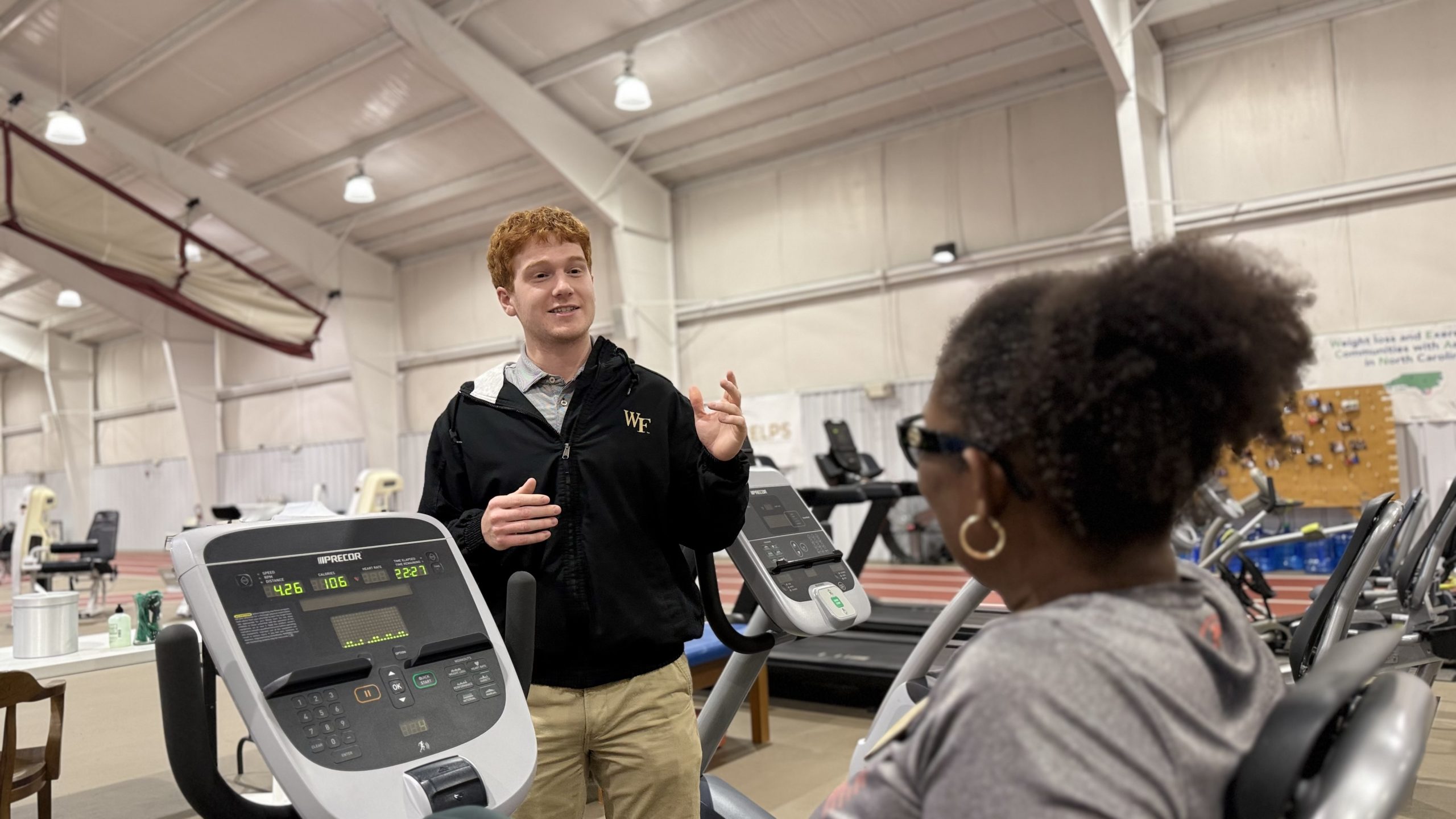
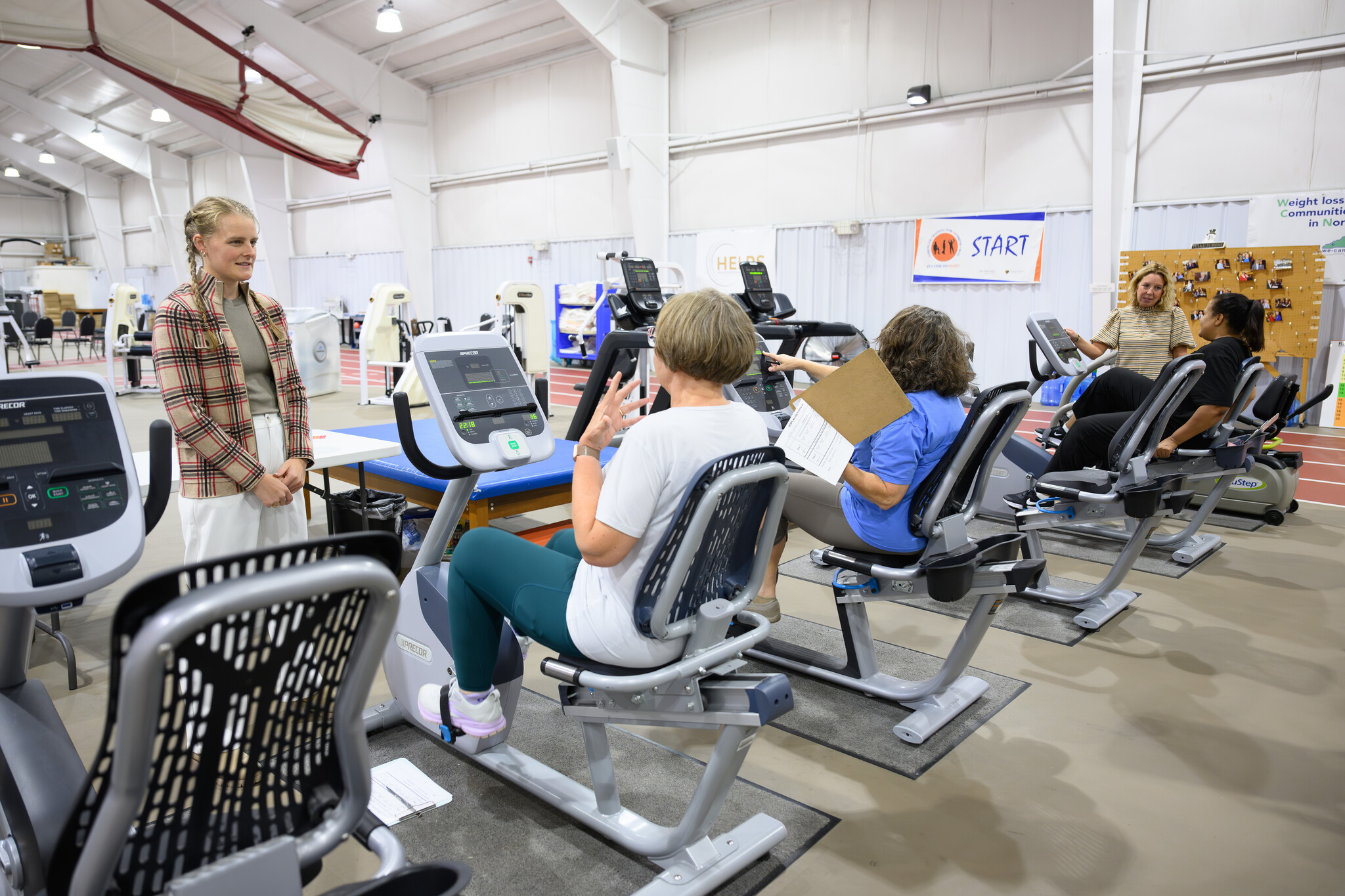
What a difference a day makes! Or just two or three hours at Wake Forest’s Clinical Research Center (CRC), affiliated with the Department of Health and Exercise Science (HES). Clocking in at 20,000 square feet, the massive facility houses a walking track and no shortage of exercise equipment — stationary bikes, ellipticals, dumbbells and resistance machines — which even the most seasoned gym rat and certainly the uninitiated might find daunting. Not so for the twice-a-week regulars: several women of — ahem — a certain age who upon arriving, are greeted by ready smiles and encouraging words from student interns Melina Anschutz (’26) and Nathan Rye (’27), as they monitor the ladies’ blood pressure and retrieve their workout logs.
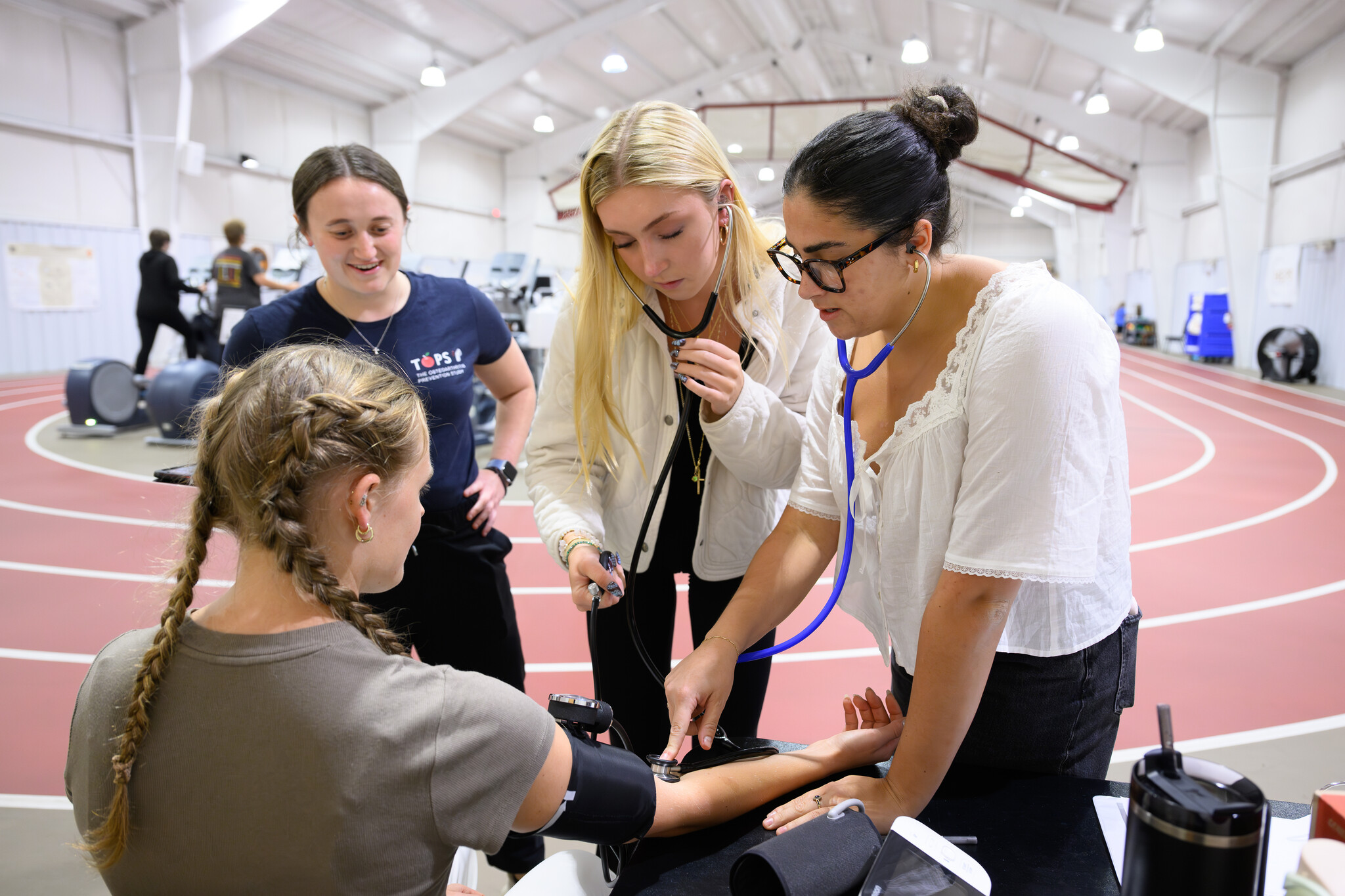
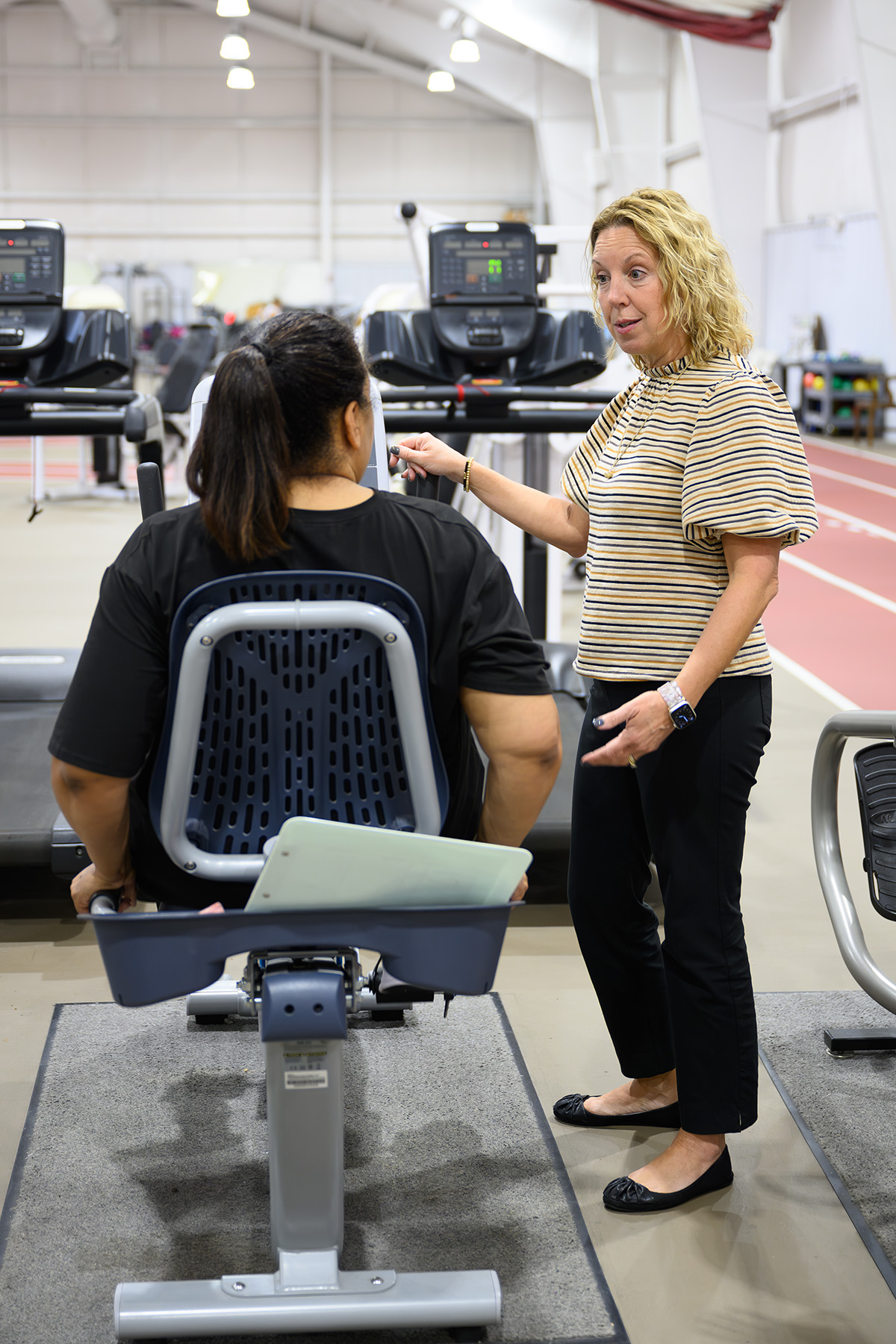
The women are among some 360 participants in The Osteoarthritis Prevention Study (TOPS), a clinical trial launched in August of 2024 to determine whether diet and exercise can prevent the degenerative joint disease that so commonly afflicts older populations. The candidates “must be at least 50 years old with at least one good knee, no known osteoarthritis and overweight,” explains Emma Schossler, research assistant and interventionist, who keeps track of all 360 women, some of whom, like the semi-weekly crowd, come to the CRC for an exercise program and diet counseling; earlier groups, having moved to a maintenance phase, come to CRC once a month, and others, only four times a year. “It’s a lot of people,” Schossler concedes. And she relies on a rotating team of about 12 to 15 interns to help chart the participants’ progress.
Unlike their counterparts, however, Melina and Nathan have been stalwarts of the study for multiple semesters. Having heard about it from professors in the HES department, including two of TOPS’ investigators, Dr. Gary Miller, and Melina’s honors advisor, Dr. Shannon Mihalko , the pre-med students were eager to gain hands-on experience. “I think that’s the best part, patient interaction,” says Melina, a senior hailing from Potomac, Maryland who also does a lot of data entry for the study. “You get more out of it than you can from typical bench research.”
Nathan concurs. His primary responsibility is to screen potential TOPS candidates to determine their eligibility. In addition to the basic age and gender requirements, the junior from Western NC reels off other criteria: “Is the participant in another exercise study already? Are they currently on any weight loss medication? Diabetic? Do they have any equipment in their knees?” Another important consideration, odd as it may seem: Do the candidates live within a 40-mile radius of Wake Forest? As Nathan would soon discover, “The biggest thing for them is coming every day. Some of them live farther away, so it really is an inconvenience to drive.” Hence, that verbal high-five when they arrive at the CRC. “To a lot of them I say, ‘you’re here.’ That’s the first step. ‘You may be having a bad day or not feeling good, but you’re here and you’re getting it done, and you should be proud of yourself.’”
That level of support is crucial to TOPS participants’ success. “We want to grow those personal relationships,” Schlosser says. “It’s how we keep up with everybody.” And that’s why you’ll see Nathan and Melina actively engaging with their charges. After the initial blood pressure check, which determines whether the participants are within a healthy range for working out — or the dreaded Weigh-In Wednesdays, which usually falls to Melina — the ladies don heart rate monitors and begin the 30-minute cardio portion of the regimen, either by walking laps around the track or using the cardio equipment. “We usually walk around, talk to them and see how their week’s been, what they’ve been cooking,” Melina says.
Does it seem strange to chat up someone easily a couple of generations older? “I love it!” she affirms. “I still have all four of my grandparents, so I’m definitely used to working with people older than me.” As for Nathan, who once worked among seniors at a small family clinic, he is keenly aware of that demographic’s diminished social interaction compared to his generation’s. “I got used to talking to them,” he recalls. “I think that’s an important way to bridge the gap.”
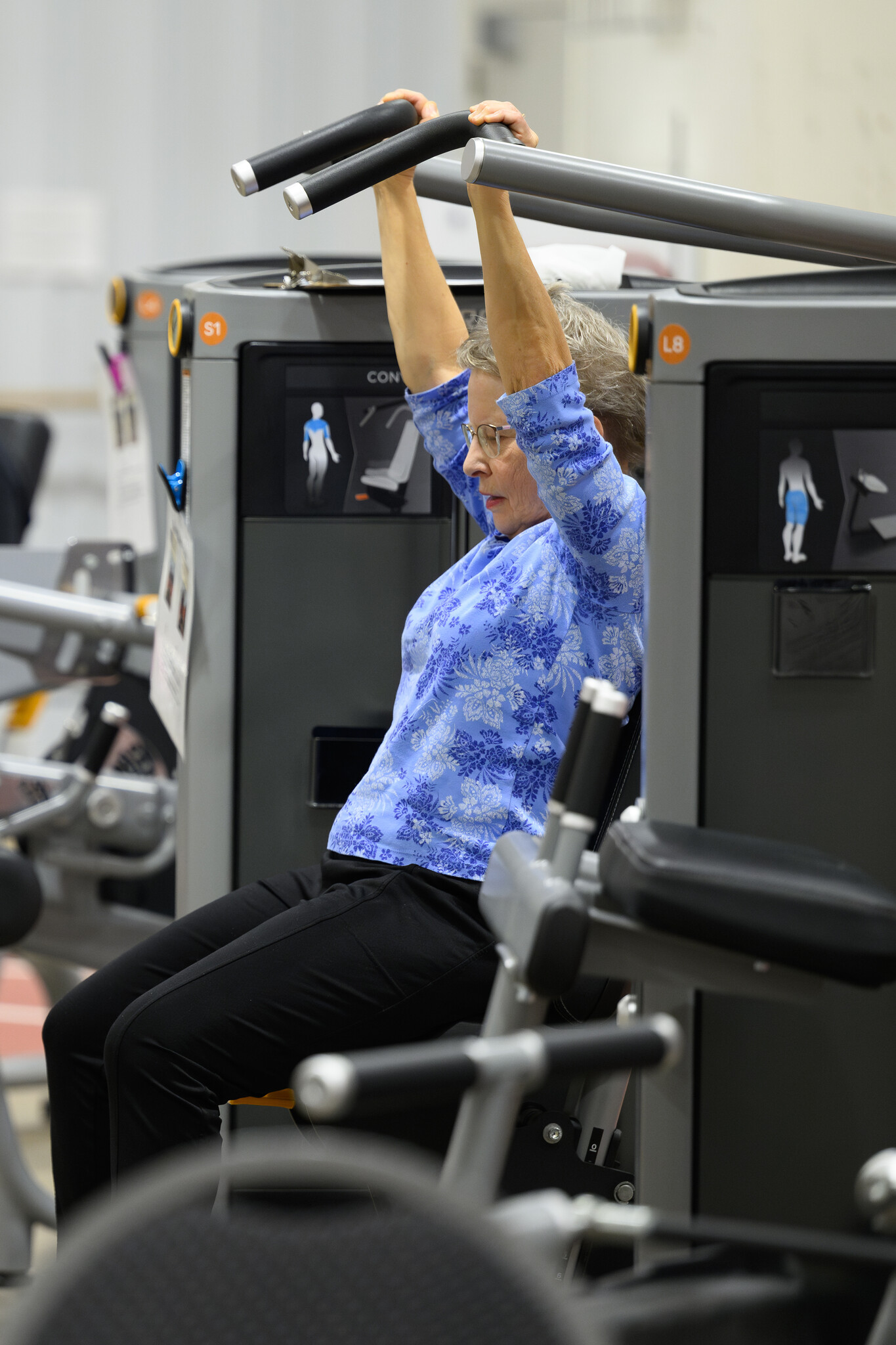
With each wave of new recruits, the interns have detected a pattern. “They get so much more comfortable here. It’s really a social space,” Nathan observes. “A lot of them, when they first come in, the machines are really intimidating.” As examples, he points to one machine with an elaborate system for adjusting height and weight, or the hip adductor machine that can be challenging to climb in and out of. “But,” he adds, “within two weeks, they’ve got it down.”
He and Melina have also noticed how the women in the study organically form smaller social groups. “We just got a new wave [of participants],” Melina says, “and the first day, people didn’t know each other. Now you’re seeing women are walking laps together instead of walking laps with their headphones on.” Little wonder, by session’s end, the women are all smiles, their blood pressure rates have fallen, and over time, they begin to report greater ease with basic activities — standing up, going up and downstairs, playing with their grandchildren.
Beyond academic credit and clinical experience, Nathan and Melina, too, are reaping immeasurable benefits from TOPS. As eyewitnesses to older bodies in motion, both are more conscious of their own lifestyle choices. For Melina, it’s a matter of “keeping my body moving even on days when I don’t want to,” and for Nathan, “just being conscious day-to-day — what are you eating? Have you exercised enough?” Perhaps more important are the life-lessons the ladies of TOPS have imparted to them. “They have a different perspective on stuff,” Melina notes “My head is spinning with all I have to do,” she continues, referring her pre-med classes, her senior thesis and college life in general. “I love coming here for two, three hours a day, and being off my phone, talking to people. It’s a big stress-reliever.” And reciprocating Nathan’s initial pep talk, the participants are only too willing to give him a pat on the back. “Everyone is super-nice,” he says. “A lot of what they say is, ‘Just keep going. You’re young. You’ll get through it. It’s fun to be challenged.’”
Welcome advice for the rising senior facing the overwhelming medical school application process and, if the planets align, following Melina’s lead with his own research project. She, too, has a full plate prior to graduation, presenting her thesis, which addresses, among other things, the role of breast cancer treatment on exercise capacity — a topic strengthened by her observations at TOPS. Melina also hopes to continue working in clinical research during a gap year before jumping onto the med-school-go-round. But if the two interns have learned nothing else from TOPS it’s this: Keep moving. And enjoy it . . . even for just two or three hours on a given day.
— by Nancy Oakley