Thursday Thoughts
In this Issue:
- New AI fluency courses for students via the AI Impact Clinic
- Want a career edge in the AI era? Build these human skills.
- A top marathoner needs science to win big. He comes to Wake Forest for testing.
- Photostory: URECA Scholar Leyla Herrera (’27)
We are nearly at Move-In, and I would encourage all families to keep an eye on the weather and plan accordingly. Here’s what the forecast showed around midafternoon today:
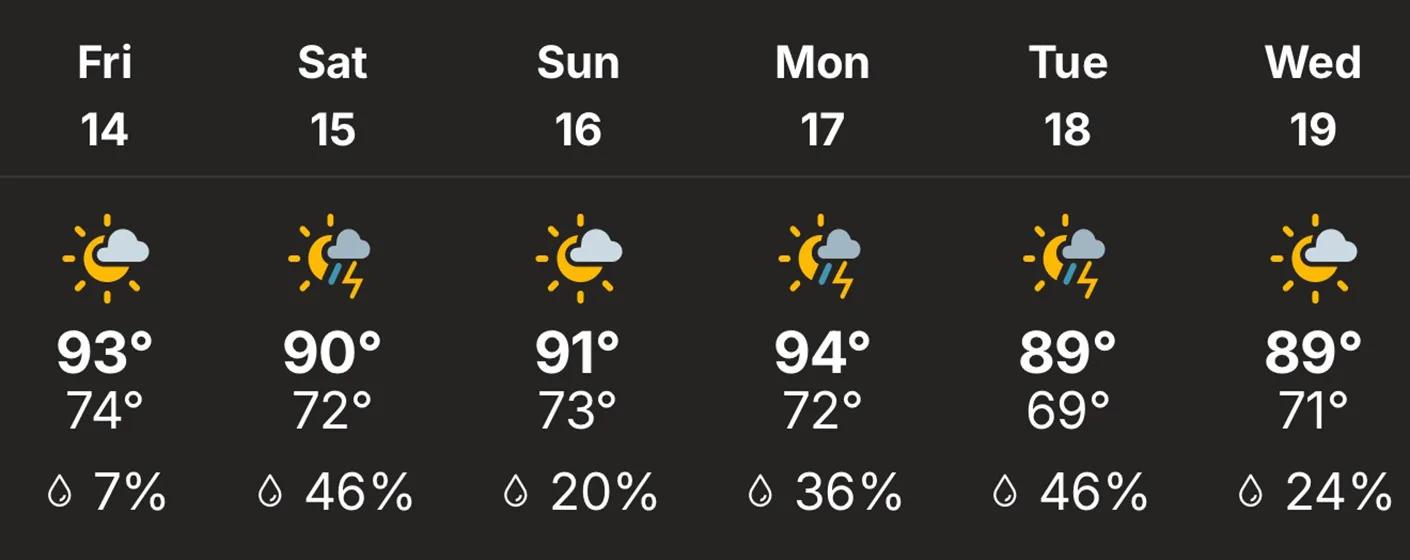
Knowing that move-in can be hot and sweaty work, please remember to bring a refillable water bottle (we have chilled water dispensers all over campus), sunscreen if you need it, etc.
I will be extensively involved with activities for new student move in and family orientation through next Wednesday, so the Daily Deac might be a little slimmer than usual.
New AI fluency courses for students via the AI Impact Clinic
One of my colleagues in the School of Business wanted to share this information about a very timely new course series on building AI fluency:
“If there is one question on every family’s mind this year, it’s how students will learn to navigate artificial intelligence. Wake Forest answers with a new hands-on program launching this fall: the AI Impact Clinic. It’s a paired two-course sequence: AI Impact Clinic 1 in the fall (CSC 191) and AI Impact Clinic 2 in the spring (BUS 380). Each one is 1.5 credits and pass/fail. The courses are open to undergraduates of every major, with no prior experience required.
They are part of the university’s campus-wide AI for Human Flourishing initiative, an effort to help students explore AI thoughtfully and responsibly, keeping human judgment and curiosity at the center. In the fall course, students learn to work with AI tools like Claude with genuine skill, not shortcuts, but with the discernment to know when to rely on these tools and when not to. Along with repeatable workflows they can carry into any project, job, or team. In the spring course, they put those skills to work. Small teams are paired with organizations to tackle a real challenge and present their results to actual clients, leaving with a project worth talking about in an interview.
Whether your student is a computer science major or has never written a line of code, they’re welcome. The only prerequisite is curiosity. You can learn more, and students can express interest in the fall course at the AI Impact Clinic website.”
Want a career edge in the AI era? Build these human skills
As a continuation of the previous item in today’s Daily Deac, Consumer Affairs published an article that quoted Andy Chan, Wake Forest’s vice president for innovation and career development. It’s worth the full read, but here is a taste:
“Durable human skills can give students an advantage regardless of what they choose to study. In an increasingly AI-driven job market, knowing how to use technology is only part of the equation — knowing when, why, and whether to use it may be even more important.
Whether you’re a recent grad just entering the job market, or a seasoned expert in your field looking for a new opportunity, Chan recommends fostering ‘human’ skills.
The top of his list? Critical thinking.
‘AI can give you answers very quickly. But it still takes a thoughtful human being to determine whether it is answering the right question, whether the answer makes sense, and what to do with it,’ he said.
‘I’d add communication, relationship-building, empathy, creativity, ethical reasoning, and self-awareness. And increasingly, I think adaptability, initiative, and patience are essential. Employers want people who can figure things out, work well with others, learn quickly, and actually get things done.’
A top marathoner needs science to win big. He comes to Wake Forest for testing.
This is a super cool story – and a testament to the exceptional research and scholarship that comes out of our Health and Exercise Science (HES) department:
“John Korir is ranked the fifth-fastest marathoner in the world. He wants to break a record this year, but does not have access to performance testing in his home country. He turned to researchers in the Department of Health and Exercise Science (HES) to see if he could somehow tailor his training to boost his performance by 1%.” Read the news story or see more on Instagram.
Photostory: URECA Scholar Leyla Herrera (’27)
One of the distinctives of a Wake Forest education is the ability for undergraduate students to do research with their faculty – something that is only available to graduate students at other schools. Today we have a photostory about URECA Scholar Leyla Herrera (’27) and Dr. Christopher Krieg of the Biology department; they are doing research using comparative ecophysiology among diverse fern and cycad species at the Emily Allen Wildflower Preserve:
“Ecophysiology is the study of how living organisms function in response to their environment. For plants, this includes understanding how factors such as water availability, sunlight, and temperature affects processes like growth, reproduction, and survival.
Leyla’s research focuses on the ecophysiology of ferns and cycads, two ancient groups of plants that have existed for hundreds of millions of years. Even though these plants have survived major environmental changes throughout Earth’s history, many aspects of their physiology and how they function in response to their environment remains poorly understood.”
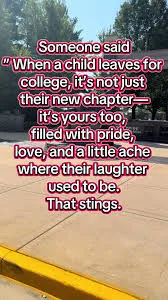
To all of the families who are reading this – and are tenderhearted and sentimental like me – I leave you with a couple of quotes on sending our beloved children to (or back to) college.